Ministerial Regulation No. 15 (B.E. 2567), explained
Ministerial Regulation No. 15 (B.E. 2567) took effect 30 April 2024 under the Labour Protection Act B.E. 2541. It brought Thailand's domestic workers under minimum wage, a written contract, paid sick leave, a weekly rest day and paid public holidays. It did not grant social security or full overtime and severance rights.

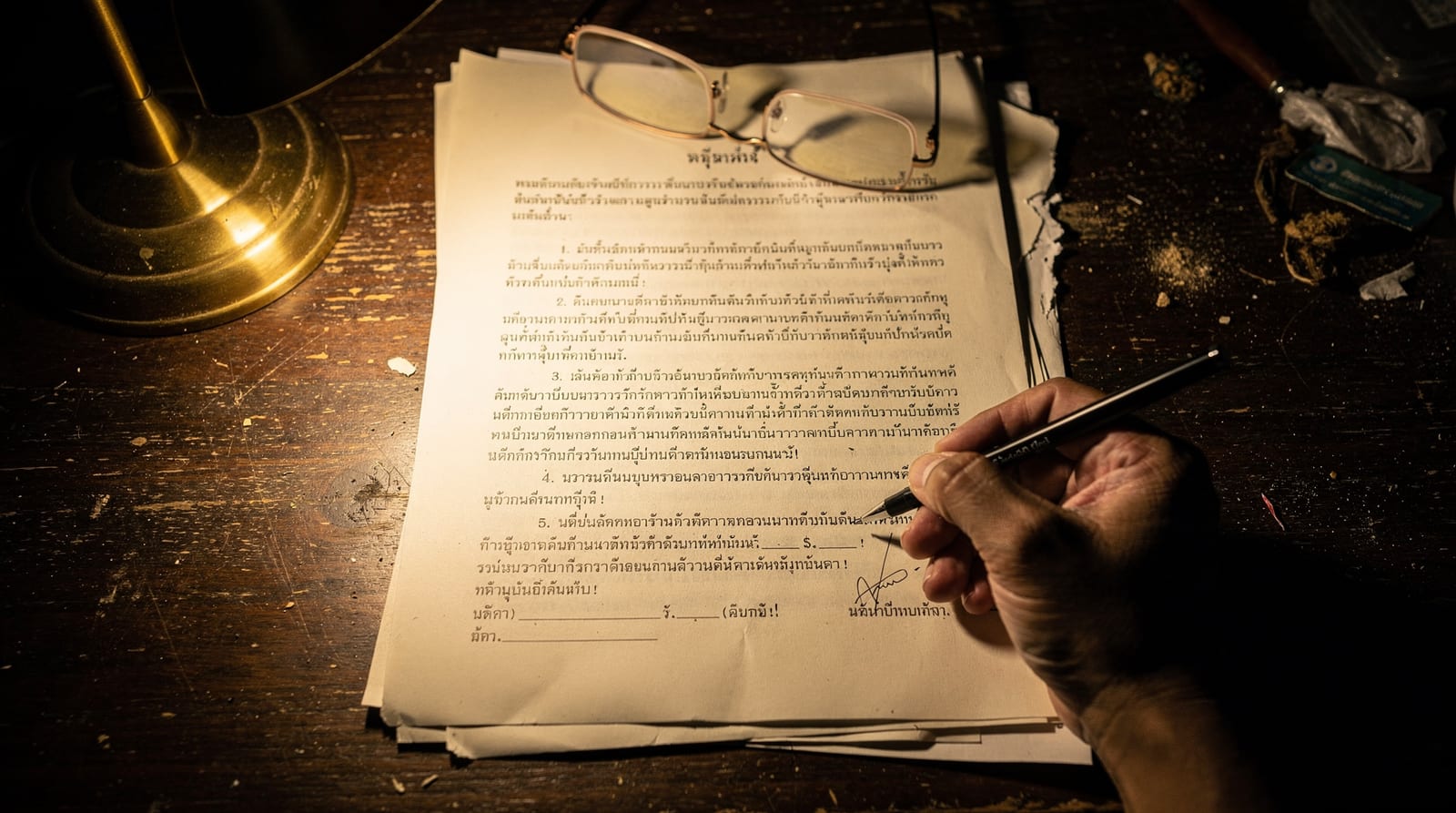
The bullet answer. Ministerial Regulation No. 15 (B.E. 2567) was published in the Royal Gazette on 30 April 2024 and took effect the same day, under the Labour Protection Act B.E. 2541. It brought Thailand's domestic workers under minimum-wage, written-contract, paid sick-leave, weekly rest-day and paid-public-holiday protections. It did not grant social security access, did not extend the full Labour Protection Act overtime and severance regime to domestic workers, and did not change the rules on hiring foreign workers. For those you still need the MOU framework and the Royal Ordinance on the Management of Employment of Foreign Workers B.E. 2560.
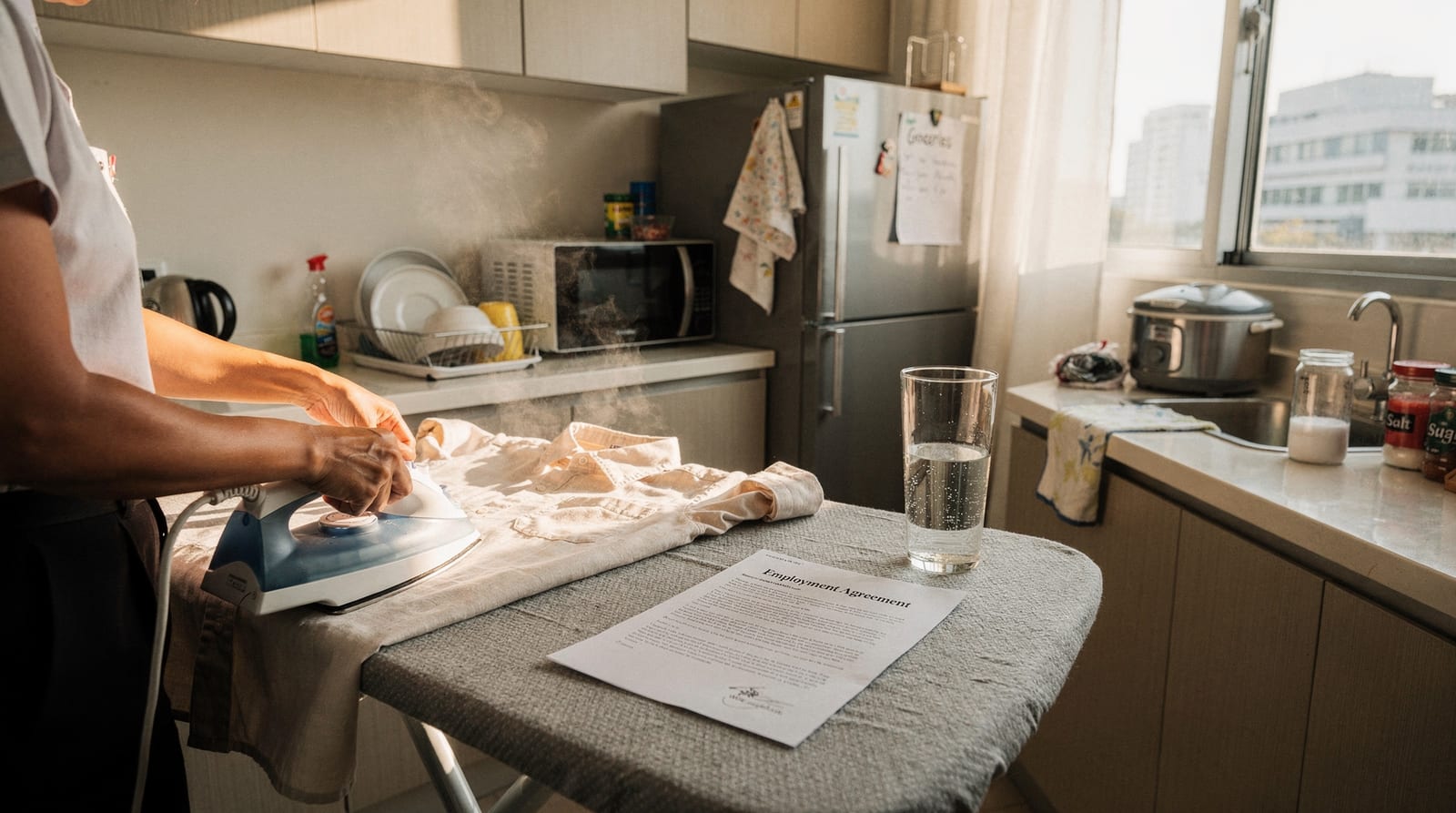
What is Ministerial Regulation No. 15?
MR 15 is a ministerial regulation: a piece of subordinate legislation issued by the Minister of Labour under the authority of the Labour Protection Act B.E. 2541 (1998). It was published in the Royal Gazette on 30 April B.E. 2567 (2024) and entered into force on the same day.
It superseded Ministerial Regulation No. 14 (B.E. 2555), which had been the relevant instrument from 2012 onward. MR 14 was minimal: it applied parts of the Labour Protection Act to domestic work but excluded minimum wage, working-hour limits, overtime and maternity leave. MR 15 closes much of that gap.
Source: Ministerial Regulation No. 15 (B.E. 2567), issued under the Labour Protection Act B.E. 2541, published and effective 30 April 2024. Confirmed via the Department of Labour Protection and Welfare legal division, the Public Relations Department, and the ILO.
What changed from MR 14 — the side-by-side
The cleanest way to read MR 15 is to put it next to its predecessor. The shaded rows are where the regulation moved.
| Protection | MR 14 (2012) | MR 15 (2024) |
|---|---|---|
| Minimum wage | Not applied to domestic workers | Provincial daily minimum applied |
| Written employment contract | Not required | Required, in a language the worker understands |
| Weekly rest day | 1 day/week | At least 1 paid day/week |
| Public holidays | Not applied | At least 13 paid public holidays/year |
| Annual leave | Not applied | At least 6 paid days after 12 months |
| Sick leave | Not specified | Up to 30 paid sick days/year |
| Working-hour limits | Not applied | Max 8-hour day, 48-hour week, 1-hour break |
| Maternity leave | Not applied | 98 days, up to 45 paid by employer |
| Minimum working age | Not specified | 15; restrictions on ages 15–17 |
| Full LPA overtime/severance regime | Not applied | Still a recognised gap (see below) |
| Social Security Fund access | No | Still no (Section 33 exclusion stands) |
| Workmen's Compensation Fund | No | Still excluded |
Table compiled from the ILO MR 15 employer factsheet (June 2025), the ILO 2024 article on the new domestic-work regulations, and Tilleke & Gibbins.
The minimum-wage rule, applied to maids
This is the single biggest change and the one most employers do not realise applies to them. Since 30 April 2024, MR 15 binds employers of domestic workers to the provincial daily minimum wage set under the Labour Protection Act. There is no special domestic-worker rate: the worker is owed the rate in force where the work is performed. The rates in effect since 1 July 2025 (Wage Committee Notification No. 14) are:
| Province group | Minimum wage / day | Approx. monthly* (26 days) |
|---|---|---|
| Bangkok, Phuket, Chonburi, Rayong, Chachoengsao, Koh Samui (Surat Thani) | ฿400 | ฿10,400 |
| Chiang Mai (Mueang district) | ฿380 | ฿9,880 |
| Chiang Mai (rest of province) | ฿357 | ฿9,282 |
| Narathiwat, Pattani, Yala (national floor) | ฿337 | ฿8,762 |
Source: Thai Ministry of Labour, Wage Committee Notification No. 14, effective 1 July 2025. National range ฿337 (Narathiwat, Pattani, Yala) to ฿400 (Bangkok, Phuket, Chachoengsao, Chonburi, Rayong, and the Koh Samui district of Surat Thani). No 2026 minimum-wage change was confirmed as of June 2026.
The hidden trap most agencies do not tell you about. In-kind benefits (food, housing, utilities) cannot be used to reduce the cash wage below the provincial minimum. If you offer a live-in maid ฿8,000/month in Bangkok "plus room and board," you are paying below minimum wage under MR 15, even though the room is real. The room sits on top of the wage, not in place of it.
The written contract — what it must contain
MR 15 requires every domestic worker to be given a written employment agreement, in a language the worker understands (Thai plus the worker's first language, if different). The contract should specify:
- The role and scope of duties (cleaning, cooking, childcare, elderly care, and so on), and what is not included
- The wage and the payment cycle
- Working hours and the weekly rest day
- Public holidays, annual leave, and sick-leave terms
- Live-in arrangements (room, food, utilities), explicitly in addition to wage, not deducted from it
- Termination conditions and final-pay timing
- Both parties' signatures and the date
A model contract template is published by the Ministry of Labour.
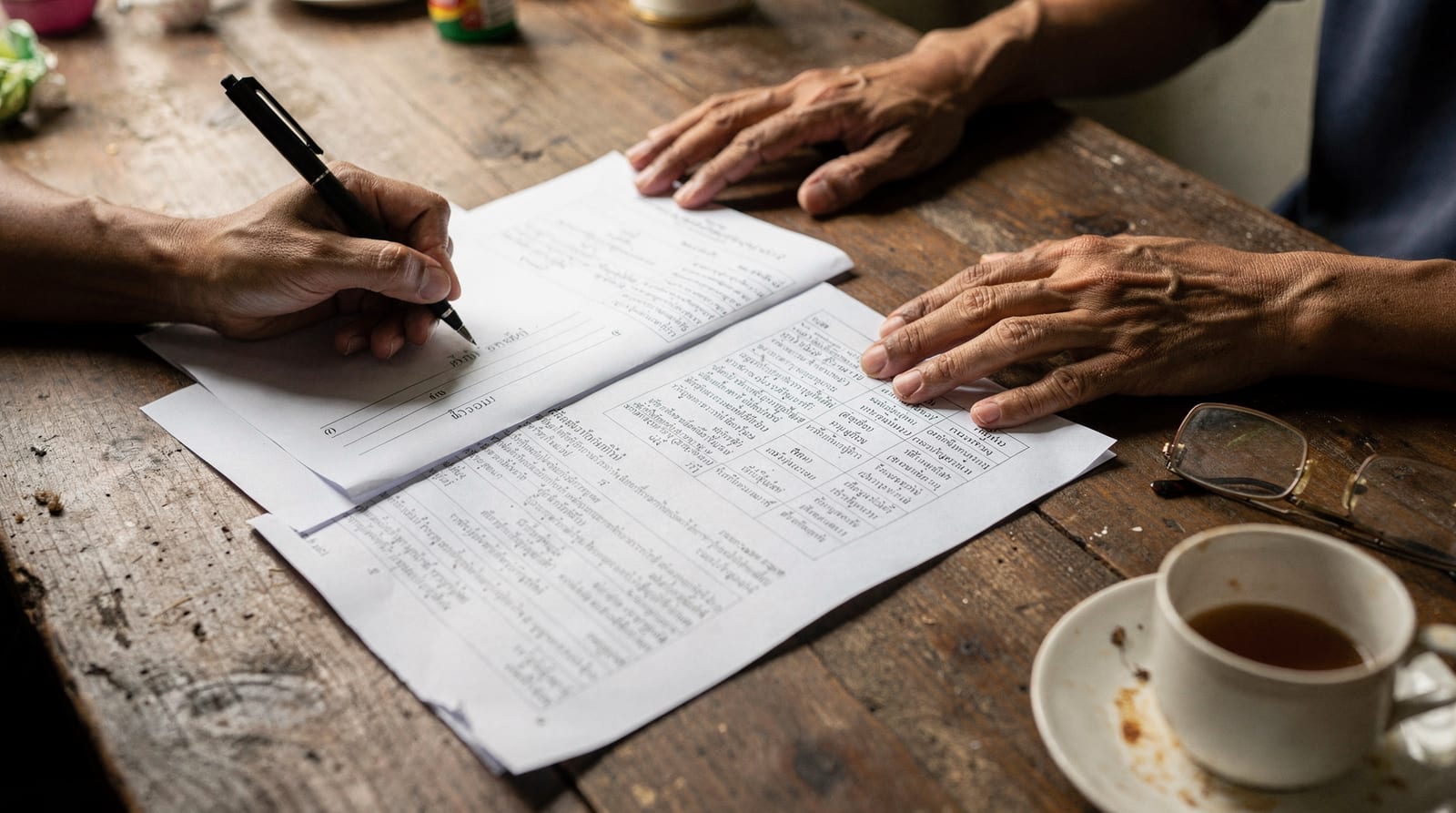

Rest day, holidays, leave
MR 15 aligns domestic workers with the Labour Protection Act chapters on leave:
- Weekly rest day: at least one full day per week, paid, with no more than six days between rest days.
- Public holidays: at least 13 paid public holidays per year, including National Labour Day (1 May).
- Annual leave: at least 6 paid days per year after the worker completes 12 months of continuous employment.
- Sick leave: up to 30 paid days per year. For sick leave of three or more consecutive days, the employer may require a medical certificate.
- Personal-business leave: 3 days per year.
- Maternity leave: 98 days total, up to 45 of them paid by the employer; no dismissal for pregnancy, and no night, overtime or holiday work while pregnant.
What changed in practice. Before MR 15, the typical Bangkok live-in maid arrangement was "one day off a month if you ask, no paid holiday, no paid sick leave." That arrangement is now unlawful. If you hired someone before April 2024 on those terms, you should re-paper the contract.
Working hours and the live-in question
MR 15 brought domestic work under working-hour limits for the first time: a maximum 8-hour working day with a one-hour break, and a maximum 48-hour week. Workers aged 15 to 17 may not do hazardous or night work (22:00–06:00) and are capped at 48 hours a week.
What MR 15 did not do is extend the full Labour Protection Act overtime and severance regime to domestic workers. The ILO lists the standard 1.5x normal-day overtime premium and the LPA severance schedule as remaining gaps for domestic workers rather than confirmed entitlements. Be careful here: do not promise a worker LPA-grade overtime or severance on the strength of MR 15 alone.
Source: ILO MR 15 employer factsheet (June 2025), which flags full overtime/severance as an unresolved gap for domestic workers.
Wage deductions and final pay
MR 15 also caps what an employer may take out of a worker's pay. Deductions are allowed only in five categories (provident fund, income tax, damage caused by the worker's wilful act or gross negligence, debt that benefits the worker, and union dues). Each deduction is limited to 10% of salary, and the total to 20% of any single payment.
On termination, the worker is owed at least one wage-cycle of notice, and final pay (including up to six untaken annual-leave days) must be settled within 3 days of the last working day. The worker is also entitled to a work-experience certificate.
Source: ILO MR 15 employer factsheet (June 2025); Tilleke & Gibbins.
What MR 15 did not change
Three big things still sit outside MR 15:
- Social Security Fund access. Domestic workers remain excluded from the compulsory Social Security scheme (Section 33). Only the voluntary Section 40 option is available to Thai domestic workers, and migrant domestic workers are largely ineligible. Private health insurance is the practical workaround.
- Workmen's Compensation Fund. Domestic workers are still excluded, leaving the employer's civil liability under the Civil and Commercial Code as the main remedy if a worker is injured on duty.
- Foreign-worker hiring rules. MR 15 governs the employment relationship; it does not change how a foreign domestic worker becomes legal to work. For Burmese, Lao, Cambodian and Vietnamese workers, the MOU framework still applies. See our MOU process explainer. For Filipino workers, see Can a Filipino legally work as a maid in Thailand?
Enforcement — and the gap between law and reality
MR 15 is real law with real penalties. A breach of MR 15 can be punished by a fine of up to ฿200,000 and/or up to one year in prison, raised from the ฿100,000 / six-month ceiling that applied under MR 14. The employer can also be ordered to pay back-wages, holiday pay and other entitlements.
The honest reality is that enforcement is patchy. The great majority of in-home domestic work in Thailand is informal, and the labour inspectorate reaches only a small share of households. The leverage is concentrated in cases where the worker has documentation, a written contract and payslips, and a translator they trust.
That is the second reason MR 15 matters even when enforcement lags: it gives a domestic worker who keeps records a real legal case.
Frequently asked questions
What is Ministerial Regulation No. 15 (B.E. 2567)?
Does MR 15 set a minimum wage for maids in Thailand?
Is a written contract required for a domestic worker in Thailand?
How many days off does a domestic worker get under MR 15?
What is the penalty for hiring a domestic worker illegally in Thailand?
Primary sources
- Ministerial Regulation No. 15 (B.E. 2567), issued under the Labour Protection Act B.E. 2541, published and effective 30 April 2024 — Department of Labour Protection and Welfare legal division
- Labour Protection Act B.E. 2541 (1998), as amended
- Social Security Act B.E. 2533 (1990) — exclusion of domestic workers from compulsory coverage
- Royal Ordinance on the Management of Employment of Foreign Workers B.E. 2560 (2017), as amended by Decree No. 2 B.E. 2561 (2018) — ss. 8, 101, 102
- Thai Ministry of Labour, Wage Committee Notification No. 14 (effective 1 July 2025)
- ILO — 2024 Thai Regulations on Domestic Work and the MR 15 employer factsheet (June 2025)
Keep reading
Minimum wage in Thailand, 2026
The minimum wage in Bangkok is ฿400/day, effective 1 July 2025 and still current in June 2026. The old ฿372/day figure is stale. Since 30 April 2024, MR 15 (B.E. 2567) makes this minimum legally apply to domestic workers, Thai and migrant, implying a monthly floor near ฿8,800 in Bangkok. National range: ฿337 to ฿400/day.
The MOU process for Myanmar, Lao, Cambodian, and Vietnamese workers
The MOU channel is the only legal route to hire a Burmese, Lao, Cambodian or Vietnamese domestic worker in Thailand. It runs in five stages through the Department of Employment. An employer who deals directly pays about 3,700 to 4,200 baht per worker in official fees. By law the employer pays, not the worker.
Can a Filipino legally work as a maid in Thailand?
A Filipino cannot be lawfully hired by a private Thai household as a maid. Thailand admits domestic foreign labour only through MOUs with Myanmar, Laos, Cambodia and Vietnam, and the Philippines has none. The Philippine side also bans direct hiring of domestic workers. The common visa workarounds are illegal.